
Data-Driven Industrial Sales Growth
Data-Driven Industrial Sales Growth
Optimizing Profitability in Complex Production Systems:
A Data Science Case Study from Industrial Dairy Operations
Client Overview

Two modern dairy farms running automated milking systems had accumulated years of operational data across milking robots, herd management software, accounting records, and livestock sales invoices.
Despite the volume of data available, the farmers lacked clear answers to their most important business questions:
- Which herd management strategies are most profitable?
- How do breeding, health events, and production cycles affect lifetime productivity?
- When should animals be culled or fattened to maximize financial return?
Their goal was to move beyond intuition and make data-driven decisions about herd profitability.
Challenge
Dairy production is a highly complex economic system where profitability emerges from the interaction of:
- biological production cycles
- breeding and reproduction outcomes
- herd health events
- fluctuating market prices
- operational constraints such as herd capacity
The farms’ data was fragmented across multiple systems, with missing lifecycle records and inconsistent identifiers.
Before any profitability analysis could begin, the production history of hundreds of animals had to be reconstructed and validated from incomplete operational data.
Data Scope
- 700+ dairy cows analyzed
- 10+ years of production data
- 1,300+ lactation cycles
- Multiple operational and financial data sources integrated
Solution
I built a data science pipeline to integrate farm data, reconstruct production histories, and model the drivers of profitability. The project involved four workstreams:
- Data Integration
Consolidated complex production, lifecycle, and financial data from automated milking systems, farm software, and accounting records into a single, analysis-ready dataset. - Lifecycle Reconstruction
Rebuilt lactation cycles, dry-off periods, calving intervals, and reproductive histories to create complete production timelines for each animal. - Production & Profitability Modeling
Developed statistical and machine learning models to identify which management strategies generate the strongest financial outcomes. - Decision Frameworks
Translated analytical findings into practical guidelines for herd retention, breeding strategy, and livestock sales decisions to maximize profitability.
Key Results
Cows Deliver Value Longer Than Expected
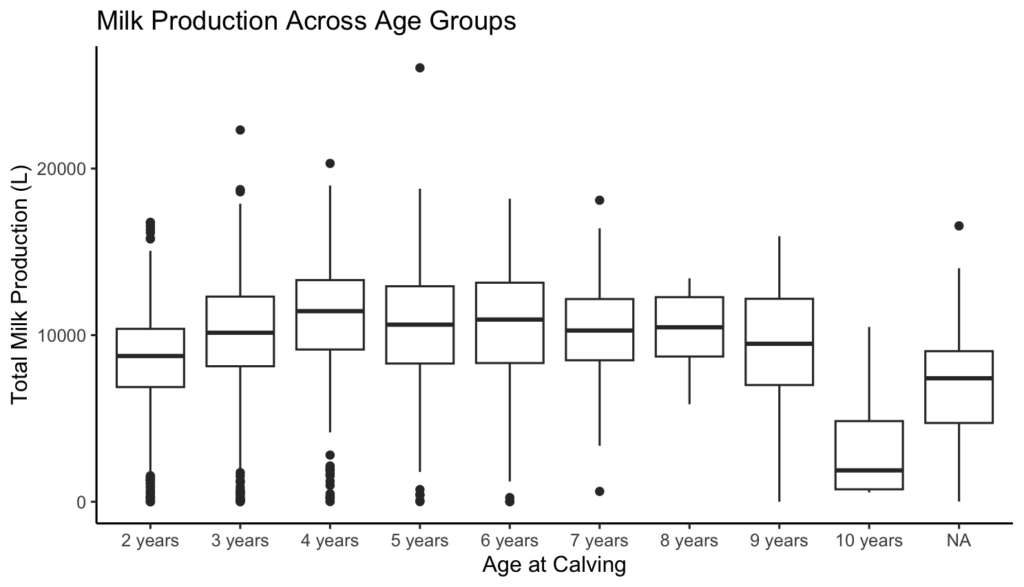
Milk production rises significantly after the first lactation and remains stable for several years.
Many cows remain economically productive well beyond the farms’ current average culling age (5 years old).
Implication: Early culling may eliminate profitable production years.
Milk Yield Drives Herd Retention Decisions
Milk production is the strongest driver of culling decisions.
High-risk cows (Group 4) tend to have well below-average milk production.
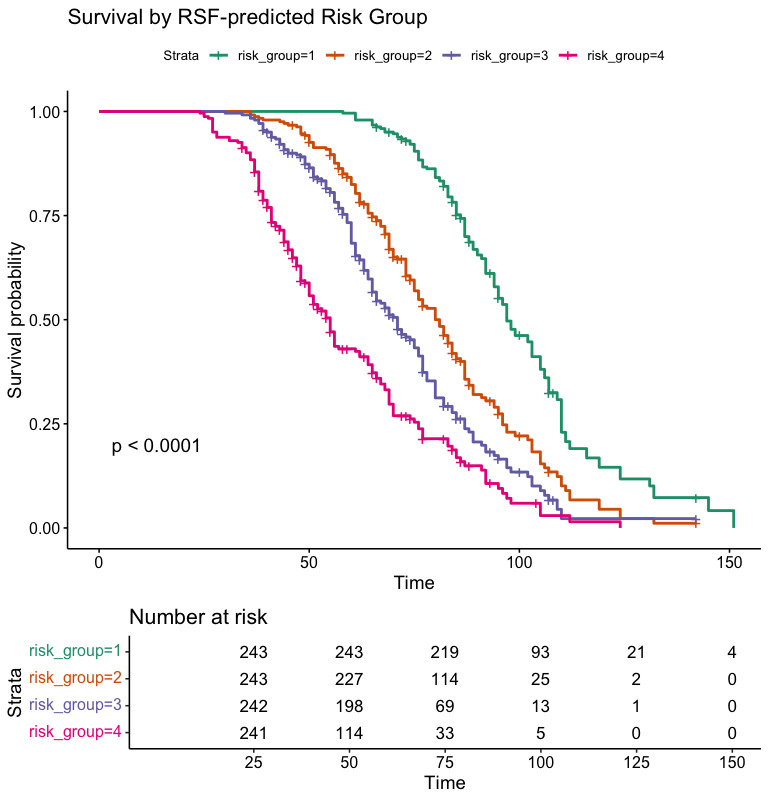
It’s striking that cows who are more productive are kept longer even if they have slightly more fertility-related issues, such as needing more than one artificial insemination to produce a viable pregnancy and having a greater risk of a failed pregnancy, or other health problems.
Low-yield animals are far more likely to exit the herd, while high-producing cows are often retained even when they require additional reproductive interventions.
Optimal Dry-Off Intervals Improve Production
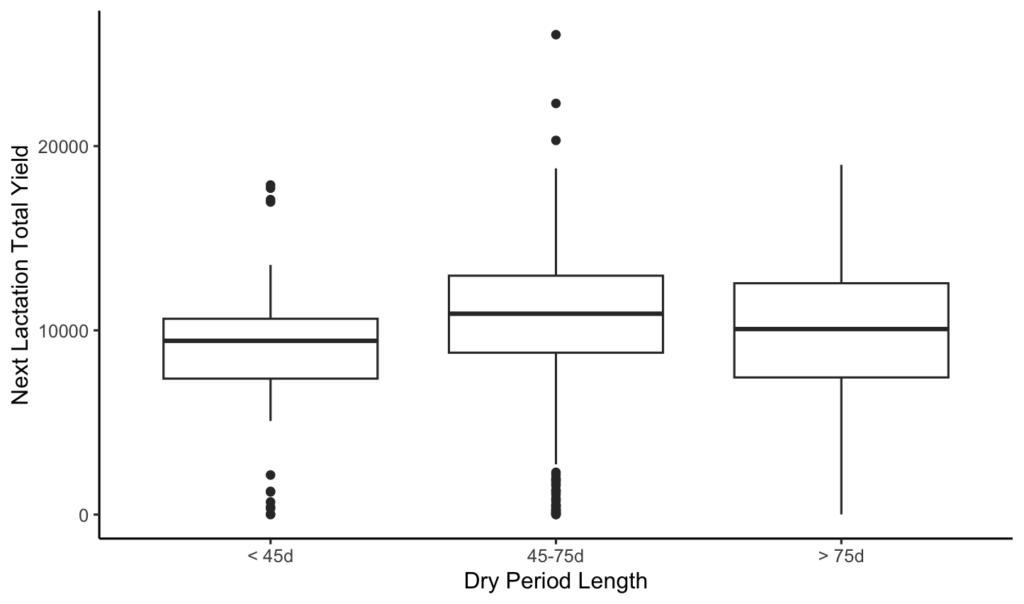
Cows with moderate dry-off periods
(45–74 days) consistently produced more milk in the following lactation cycle than cows with longer dry periods.
Implication: Managing dry-off timing can improve future production.
Targeted Fattening Strategies Increase Sale Value
The analysis identified a clear economic threshold:
Cows weighing less than ~755 kg at their last milking benefit from fattening before sale.
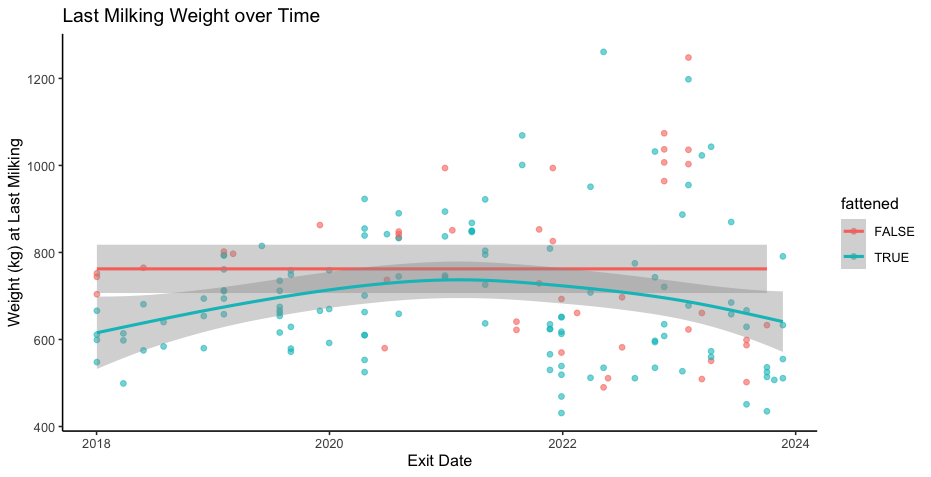
After adjusting for market conditions, fattened cows in this group sold for €22–190 more on average.
Herd Longevity Improves Overall Profitability
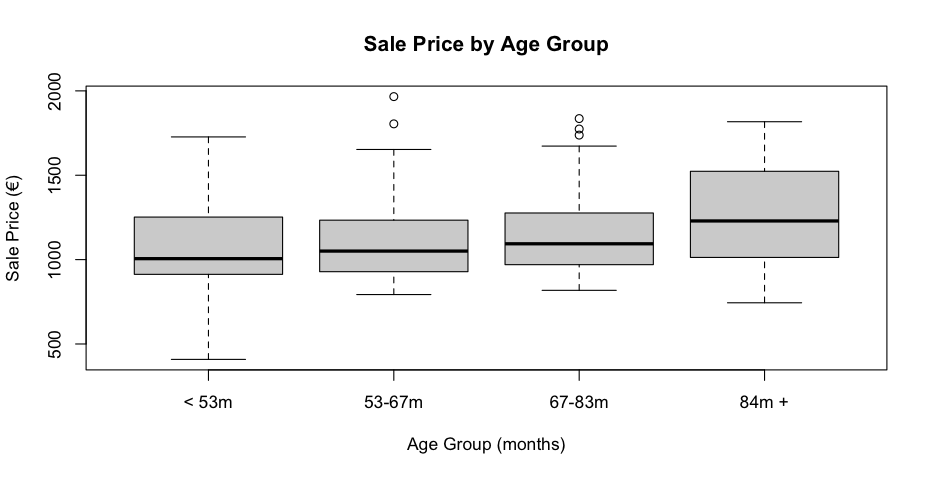
Extending herd longevity can increase lifetime economic value.
Across both farms, several patterns point to the value of keeping productive cows longer:
- stable milk production through mid-life
- higher sale prices for older cows
- fewer inseminations required over time
Client Impact
For the first time, the farmers could evaluate profitability at the level of individual animals and herd management strategies.
Instead of relying on intuition, they now have a data-driven framework for decisions such as:
- herd retention and culling strategy
- breeding and reproduction management
- fattening decisions before livestock sale
- production cycle optimization
The analysis transformed fragmented operational records into clear economic insight about what drives farm profitability.
Why This Matters for Industrial Producers
Dairy farming looks nothing like discrete manufacturing, yet the underlying analytics challenge is nearly identical.
Many industrial production environments share the same core problem: operational data exists, but it lives in silos, spans long time horizons, and connects only loosely to financial outcomes. Whether the production unit is a dairy cow, a manufacturing line, or a fleet of capital assets, the questions are the same: when to invest further and which operational variables actually move the needle on profitability.
This project demonstrates what rigorous analytics can do when applied to that kind of messy, long-horizon data. The methods used here (survival modeling, machine learning for variable importance, GAM regression for market adjustment, decision trees for actionable thresholds) are domain-agnostic.
The same approach applies wherever profitability is driven by complex production cycles and emerges slowly over time.
Ready to Drive Profitability?
You already have data. Let’s put it to work for you.
The diagnostic call is a 30-minute conversation to explore how your data can help you increase revenue and improve margins.